Friday, February 22, 2019

Here now the Sun: a poem for Valentina Tereshkova, the first woman in space


I. Ready for launch

The suit is working well.
The inflow stream is working well.
I’m ready for launch.
I feel excellent.
Everything is normal.
I’m not a delicate lady.
Everything is normal on board.
I’m ready for launch.
I’m taking up the initial position.
Feeling excellent.


II. Launch

The vehicle’s moving smoothly,
vehicle’s moving smoothly.
I feel excellent.
Vehicle’s moving well.
I feel good.
I feel good.
I see the Earth on the porthole.
I feel excellent.
The Earth is very beautiful.
The vehicle is moving smoothly.
I see the Earth in the porthole,
slightly obscured by clouds.


III. Orbit

I’ll do everything that I need to do.
I don’t understand.
I didn’t see anything.
I feel excellent.
The clock is moving.
I see the horizon through the observation port.
I see the Earth in the observation port.
I feel excellent.
All systems on the vehicle are working perfectly.
Everything is excellent,
I hear you perfectly.


IV. The other cosmonaut

I hear you perfectly,
I feel excellent.
I feel excellent, excellent.
I’m approaching Cape Horn. At the outer ring …
The little star disappeared, wasn’t that you?
Don’t go far from me, my friend.
I can’t see the Moon.
The stars are passing further up.
I am seeing such a bright star.


V. The ships are on their way

The vehicle is responding perfectly, perfectly.
Roger
Roger
From the southern point I called him,
he’s silent,
from the north,
the same.
At our harbour the ships are silently smoking… 

Can you hear?
For the real boys, the harbour is the native home,
comrade to comrade,
they’ll always stand together.
And far far away, 
the ships are on their way,
and all who are young at heart,
stand shoulder to shoulder.


VI. Fourth orbit

19 hours 25 minutes
I sang songs for him
In the centre,
such a blue spot.
Here now the Sun
so orange, not red,
not light red, but
orange.
I’m also feeling excellent.
Here now the Sun
visible and lit up.
In the outer ring
the horizon is visible.
It’s a very beautiful sight.
at first it’s light blue,
then lighter,
then dark…


VII. Greetings to all the women of the world

Soviet women!
Greetings to all Soviet women.
I wish you personal good luck
and great success
Women of the world!
Greetings to you from space.
I wish you good luck
and success...


VIII. The flight is normal

Cabin pressure 1.15
Humidity 61 percent
Temperature 23 degrees
Carbon dioxide 0.1
Oxygen 250
Pulse 84-90-100
Breathing 22
I feel excellent.
See you soon in the homeland!
I hear you perfectly, perfectly.
The flight is proceeding normally.
All systems of the ship are working perfectly.
I feel excellent.
I hear you.
I’m waiting.
Everything is excellent.
The spaceship is working perfectly.
I’m in good spirits.
I feel excellent.
I hear everything well.
The flight is normal.
All systems on the ship are working perfectly.
Pressure in the suit 1 atmosphere
Humidity 40 percent
Temperature 28 degrees
Carbon dioxide 0.2 percent
Oxygen 200
All systems on the ships are working excellently.
I feel excellent.


IX. Dear Nikita Sergeyevich

Dear Nikita Sergeyevich!
I will use all my strength and knowledge to fully complete the flight
‘Till we meet again soon on our Soviet land.
Moscow, Kremlin.
I am reporting.
Dear Nikita Sergeyevich Khrushchev.
The flight is proceeding normally.
All systems on the ship are working perfectly.
I feel excellent. 
Thanks to all the Soviet people
See you soon in the homeland!
Dear Nikita Sergeyevich,
deeply touched by your attention.
With all my heart
Dear Nikita Sergeyevich!
I will use all my strength and knowledge to fully complete the flight,
‘Till we meet again soon on our Soviet land.


X. Shadows

There aren’t enough fingers to block the Sun.
It’s very sunny, difficult to see
at the present a very bright sun,
illuminating the very high clouds...
the horizon above the bright clouds
transitions into shadows.
The dark sky is visible in the survey viewport.
The flight is proceeding normally.
I feel excellent.


XI. This is Chayka

This is Chayka. Over.


Notes

This is a poem made using a technique called erasure, removing words from an existing text to create a new one. The words are from an edited transcript of Valentina Tereshkova's spaceflight. In 1963, she was the first woman to enter space and remains the only on to have performed a solo mission. 

I took the transcript from a paper by space historian Asif Siddiqi. This was not a complete transcript, so poem is only constructed from what Siddiqi reproduced, and of course it is important to remember that the transcript is translated from Russian to English. The transcript lent itself to short, repetitive sentences. My influences in taking this form were Gertrude Stein and HD, particularly her poem Eurydice. Another influence is Christine Rueter (@tychogirl), who first made me aware that poems existed within other texts, waiting to be brought out.

I used only Valentina's words; I wanted to maker her voice front and central, give her a narrative that was purely from her perspective without the judgement of others. She was in conversation with many people during the flight, including Yuri Gagarin, the first man in space, and Soviet leader Nikita Khrushchev. I erased anyone who wasn't Valentina, and then removed paragraphs, sentences or parts of sentences to arrive at the poems you read here.

The other cosmonaut referred to was Valery Bykovsky, who was orbiting at the same time. They were supposed to sing a duet together from their separate spacecraft, but in the end Valentina sang by herself. In 'The ships are on their way', the latter part of the poem is from two different Russian songs, ‘Textile Town’, a 1960s hit by Mikhail Tanich, and ‘Friendship Song’, according to Siddiqi. This was Valentina's own mash-up within the text.

Valentina's flight was heavily criticised and constantly dissected. She was, in fact, not feeling excellent, but in the circumstances unable to admit this - a common problem for astronauts in the USSR and US. Space sickness was poorly understood, and admission of anything less than perfection could risk future flights. In addition, an engineer had made a mistake - the Vostok capsule was programmed to ascend, but not to descent. Valentina discovered this a few hours into her flight, which must have been a shock. The error was rectified, fortunately.

The sequence, with one exception when I moved text about the Sun to the same poem, is in the order in which it was spoken, so represents the chronological unfolding of her mission.

The final verse is made up of a phrase which was used repeatedly throughout the transcript. Tereshkova's callsign was Chayka (seagull). At the end of every segment of speech, she says 'This is Chakya. Over'; so I made this the end of the poem sequence. She repeats 'Over', but the poem does not include return to Earth. I wanted to create the impression that this was a moment in time, that she might still be out there, suspended, her state of existence ambiguous. Like she's flying into the sun, and the brightness of the sun prevents us from following her trajectory any further, fading her out like the radio signal.


References
Siddiqi, Asif  2009 Transcripts give new perspective on Vostok-6 mission. The first woman in Earth orbit. Spaceflight 51: 18-57


Sunday, February 17, 2019

Ready for launch - a poem for Valentina Tereshkova #2


-->

Ready for launch


The suit is working well.
The inflow stream is working well.
I’m ready for launch.
I feel excellent.
Everything is normal.
I’m not a delicate lady.
Everything is normal on board.
I’m ready for launch.
I’m taking up the initial position.
Feeling excellent.


Valentina Tereskova preparing for launch.
Image credit: @Sputnik


This is a poem made by selecting and rearranging words from a segment of conversation in the transcript of Valentina Tereshkova's epic orbit of the Earth in 1963. So in a way we are joint authors of this work. Note also the influence of Gertrude Stein.


Sunday, February 03, 2019

Fourth orbit: a poem for Valentina Tereshkova #1


Fourth orbit

19 hours 25 minutes
I sang songs for him
In the centre
such a blue spot.
Here now
the Sun
so orange, not red,
not light red, but
orange.
I’m also feeling excellent.
Here now
the Sun
visible and lit up
In the outer ring
the horizon is visible.
It’s a very beautiful sight
at first it’s light blue,
then lighter,
then dark…


Image courtesy of wrexham.com
http://www.wrexham.com/news/hurricane-ophelia-creates-red-sun-phenomenon-over-wrexham-138803.html


This is a poem made by selecting and rearranging words from a paragraph in the transcript of Valentina Tereshkova's words during her epic orbit of the Earth in 1963.  It seemed to me that the poetry was already in there and only needed coaxing to bring out. I feel there's something a little Gertrude Stein-esque about it too.


-->

Wednesday, January 23, 2019

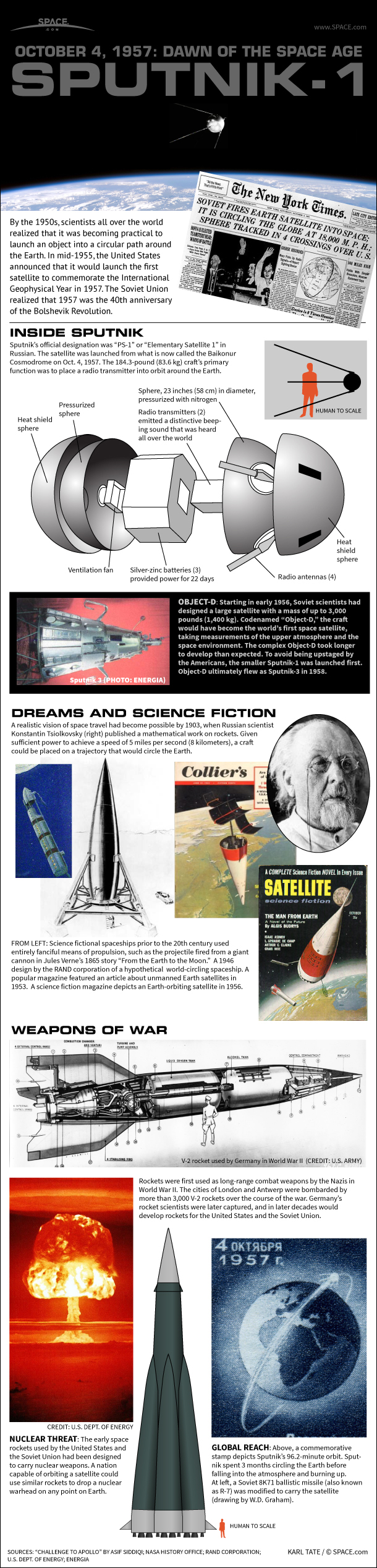
Sputnik 1 lives on in models of the world's first satellite

In 2017, I was lucky enough to be part of a UN workshop on the theme of women in space. Most of it was run at the offices of UN Women, but one session was in UN HQ in New York City.

I was delighted to see a model of Sputnik 1 suspended from the ceiling in the lobby. The model was presented to the UN by the USSR in 1959. 

The satellite itself of course no longer exists, having re-entered after three months in orbit in January 1958. I wonder what you would find if you made a catalogue of all the Sputnik models that existed in the world - a footprint of its cultural influence? The catalogue would include the model that usually resides on my office desk, for example. You'd never be able to track them all - there must be so many small ones produced as models or toys dispersed throughout the world. Some would be in museums; some in public institutions like the UN; others in universities. The rest would be in schools, people's houses and who knows where else.

Models don't have to be accurate, either. Perhaps there are some that are larger than the original satellite, which was 58 cm in diameter. Many would be smaller. They may use different materials, or get the angle and size of the antennas wrong. But they'll all have a shiny sphere with four long legs, the essential features of this space object which have come to symbolise the early Space Age.


Tuesday, January 08, 2019

Space junk: collection is easy, direction is hard to find.

My Twitter friend Stuart Palmer alerted me to this space junk song I didn't know about! It's a good one too. The Bats are a New Zealand band who have been around since the 1980s.


Here are the lyrics, which I have transcribed myself for your pleasure. Apologies if I have got some of them wrong. The cruisy tones sometimes made words difficult to distinguish!

Space junk is flying
And I'm goin' to go and get me some
It will be so easy
And I'll have a beautiful pile

Collection is easy
Direction is hard to find
Time is the healer

Somewhere I'll hide it
Maybe on the mellow moon
Someday I'll go and find it
Sell it for a fortune back home

Collection is easy
Direction is hard to find
Time is the healer

In the end of course I never made it
Cos I could never find a hollow moon
Space junk junk is still flying
And I'm waiting just for you to be

Collection is easy
Direction is hard to find
Time is the healer

And I'm still stuck out here
Searching for a better world

And I'm still stuck out here
Searching for a better world

And I'm still stuck out here
Searching for a better world


The song draws on the idea that space junk is collectible and valuable, just like the pieces of Skylab which scattered itself over Western Australia in 1979. It's junk in orbit, but a precious souvenir of space back on Earth. 

This makes me think about the definition of space junk and how it varies depending on where the fragment or defunct satellite is located between Earth and Earth orbit. For example, a returned spacecraft in a museum is not seen as junk because it is performing a function - communicating space science to the public.  A collected piece of junk also has a function for the person who owns it. It's a physical object that evokes the vastness of space and makes the person feel connected to it. Anything spaceflown has a magical pull for the Earthbound.

In the song, the space junk is also a compass for finding one's way in the universe. It's come to a final resting place, and its collector looks to it to provide a thread to the sky where perhaps a better world awaits. The space junk can't fulfil this role, though.

I like the way the song moves from the slightly facetious idea that a fortune can be made from selling space trash to the more melancholy reflection of being stuck on Earth still searching for a path.

I've been humming this song for days. Go Bats!


Tuesday, September 25, 2018

'Some people don't worry, baby': Skylab blues and space junk anxiety

I do love the music inspired by the re-entry of the US space station Skylab in 1979. This one is by Grimsdell, a person or band about which I can find out almost nothing. Like several other space junk songs, it is rather grim, focusing on junk falling on people and houses. Skylab is almost drawn into some kind of karmic economy - it is coming for YOU, as if the guilty will die and the virtuous be saved. Or perhaps it's that virtue won't save you, and this is what's most frightening. Be apathetic, like the couch-potato Coors-sippers, or don't; it won't matter when the end comes.

You could also say that Skylab here is just a metaphor here for a general apocalypse, standing in for nuclear devastation


They say Skylab's fallin' out of the sky
They say some people may have to die
Could fall on my house, could fall on yours

Some people don't worry baby
They just sit back, watch TV, sip on their Coors
But each day now that passes by
Death and destruction come closer from the sky

They say it'll rain tons of scientific trash
The camera vault, a one mile-crater it'll mash
One supersonic bolt or one supersonic screw
May be fallin' out of orbit straight for you

But each day now that passes by
Death and destruction comes closer from the sky
They say the scientists don't know where it will fall
But people you know, it's gonna fall on y'all

They say there's no place, no place to run
They say there's no place, no place to hide
When it's all over baby, don't you know,
Many people gon' die

But each day now that passes by.
Death and destruction come closer from the sky

Skylab blues
Skylab blues
Skylab blues
Skylab blues


Monday, September 03, 2018

Flying dreams and the human relationship to gravity

From time to time, I have flying dreams. Standing on my feet, just a tiny movement will launch me into the air, and I go soaring above the ground with my arms outstretched, as effortlessly as a bird, delighting in the freedom.

When I think about these dreams, they have certain elements in common. It's always sunny with a blue, blue sky - maybe a couple of white fluffy clouds. There is green, even grass below me. The ground is flat or gently undulating at most. There's always a house. Not a familiar house, more like a greeting-card house or a children's book illustration. There are no houses nearby, just the house on a wide green lawn. I fly above the house at a certain height. I can see trees and often there's a Hills Hoist clothesline in the garden. No fences, though. It's much lower than aeroplane height, and the view is always of the immediate environment of the house.

It's a domestic dream, and perhaps a child's dream, when your whole world revolves around the house and the extent of space is a concept you've yet to fully grasp.

When I wake up from a flying dream, I often still feel the lack of gravity. The sensation that I can just will myself into the air and fly stays with me until I put my feet on the ground and realise how heavy I am, and how adhesive gravity is. I feel intense sadness at this moment. Being heavy seems such a burden. After a few steps, the residues of the dream evaporate and I'm fully awake.

Thinking about these dreams has led me to a curious thought. What if they are part of a pre-adaptation to space?

Now it's true that the human body is not well adapted to microgravity, and we know a fair bit about this because of astronauts' experience in Earth-orbiting space stations. Blood pools in the upper body, muscles atrophy, bones lose their calcium and weaken. We probably don't really know enough yet about the long term health affects of living in space either - a year is a long, long time in space, and only a few people have spent that long up there.

Despite this, humans seem to have an urge to defy gravity, whether it's aeroplanes or rockets. This starts very early. Remember how you loved being thrown up in the air and caught when you were a little kid, and how it made you laugh? The thrilling sensation of a centrifuge, when an adult or older child held your hands and swung you around in a circle? And just how much fun swings in the local park were? Even little tiny babies love these things.

Swimming is fun because we can also defy gravity in water, moving in any direction we want with a twist and flap. In the water, our feet are not stuck to the clay of the Earth. There's nothing beneath them and our personal space expands to a sphere rather than a dome. It's just a shame that water exerts a drag that's absent in the air. Also, there are things that can bite you in water.

My desire to fly doesn't mean I'm drawn to sky-diving, or hang gliding, because that's not what this is about. It's about flight being in one's body, not a result of technology.

Having said that, I also have a slightly concerning desire to throw myself off heights just to experience the exhilaration of falling through the air. Maybe this is like Douglas Adams' 'learning to throw yourself at the ground and and miss'. I'm not afraid of heights, just afraid that if there isn't a barrier, the compulsion might become too great to resist. My lack of fear frightens me because I know logically that hitting the hard ground at acceleration is not going to have a good outcome.

I've learnt that this is called the High Place Phenomenon. One person described it thus: 'It was the opposite of vertigo. It was the urge to fly'.

I wonder how old this urge is, and if the much-vaunted 'urge to explore', when applied to space, is really just the echo of a flying dream.

Collage by Pilar Zeta.
http://www.emptykingdom.com/featured/pilar-zeta/


Monday, August 13, 2018

Outer space hats: inspiration for a drab Monday.

Who knew space millinery was a thing?

Below are two 'outer space hats' by the French designer Hubert de Givenchy (who died in March 2018). They're less space hats than space agey, though.


Image courtesy of  Conde Nast

Pierre Cardin loved a space hat. This one was made in 1965 and exhibited in Paris Refashioned 1957-1968, at the Fashion Institute of Technology in New York City.


According to the exhibition catalogue,
Molded felt hats that resembled space helmets became a signature of Cardin’s work during the 1960s, yet the designer had introduced the style as early as 1958. Vogue described a hat from that year as 'a unique Cardin projection into outer space,' underscoring the couturier’s early interest in futuristic design.
These Pierre Cardin sun and moon helmets are pretty groovy too.

Pattie Boyd and  Celia Hammond model the helmets. Photo by John French.

What, I wonder, is space fashion for the era of commercial and private space?


Sunday, June 03, 2018

Seven reasons to love French aerospace

One of the happiest months of my life was when I rented an apartment in the 20th arrondissement of Paris, so that I could do some work in the archives of the Musee de l'Air et de l'Espace at Le Bourget. Every morning I'd go down to the boulangerie on the ground floor of my apartment building for fresh pain and delight in the simple pleasure of perfect bread and butter. I may not have spent quite as much time in the archives as I intended, but what the hell.

Here are a few reasons to love French aerospace.

1. Asterix 1

Asterix 1. Image source: unknown.
When France launched Asterix 1 on a Diamant rocket from Algeria in 1965, it became the third nation in space. Asterix 1 is named for the plucky Gallic bande dessinee character who successfully holds the Roman invaders at bay against all the odds. His namesake, the sub-conical striped-and-antennaed satellite, is quite simply super-cute, and one of my all-time favourites.


Image source: author.

2. Alexandre Ananoff

While working in the archives, I became aware of an influential French space visionary. The name Alexandre Ananoff (1910 - 1992) came up over and over again. He wrote about the mechanics of spaceflight, the kinds of spaceships we might see in the future, and social aspects of space exploration. This article, by Pierre-Francois Mouriaux and Philippe Varnoteaux, appraises his contribution to French space exploration. They say:
A. Ananoff was a real ambassador for astronautics and a pioneer in space education for the general public—probably the first one in France.
In addition, he advised Herge about aspects of spaceflight for the two Tintin volumes where the boy adventurer goes to the Moon.


3. Tintin walks on the Moon


Image source: Tintin.com
To be honest, I wasn't interested in Tintin as a child, and don't have any memory of the books being around. But when I became aware, as an adult, that Tintin had travelled to the Moon, that was a different story! Objectif Lune and On a marche sur la Lune (Objective Moon and We have walked on the Moon) tell the story of Tintin and Co's encounter with rocket scientists and spies at the central European launch site in the mythical country of Syldavie and their journey to the Moon on a very V2-like rocket. As far as I can tell, it's one of the earliest depictions of footprints on the Moon.


4. Kourou

Image source: Guyane Evasion
Kourou, in French Guiana, is where the launch site of the European Space Agency is located. It has an excellent museum and a huge amount of spaceflight history. I spent a week there in 2005, also working in the archives. I touched a rocket in the assembly building, and perhaps a tiny portion of my DNA survived launch and is now in space! (Stop having a conniption, this was not a clean room situation). I also visited the famous Iles de Salut, where best-selling author and escapologist Papillon was incarcerated. I didn't see an actual launch, although I did sit in the control room viewing area and imagine the hum and chatter when it was full of people. Every day I sipped Ti-punch and thought, read and talked space.  It was fabulous.


5. Cool space words

One day, as my plane descended into Adelaide airport, I noticed a plane without wings lying in the grass near the runway. Oh, I thought, it looks like a rocket. Then I realised. Fusee - the French word for rocket -  is the same root as fuselage, commonly used to describe the body of a plane. D'oh.

The cool wordage doesn't stop there, though. My friend Alexandre Ananoff has a word for spaceship: Astronef. This, I think, it the same root as navy, and the French word for space shuttle is navette.

Scaphandre is space suit, also used for diving suit. To me, it has a Homeric ring. Or it could be a character in Aeon Flux

French has a word for landing and taking off FOR EACH PLANET AND MOON. This is beyond cool, a new galactic level of cool. You've possibly heard the terrestrial version of these words if you've flown a French airline - aterrissage. Terre is Earth, and aterrissage is landing on the Earth. Alunissage is landing on the Moon, and amarsissage is landing on Mars. In a future multi-planet solar system economy, the precision of these terms could be very useful. 


6. Musee de l'Air et de l'Espace, Paris


Just check out these babies. Image source: Capcom Espace
This museum, located at Le Bourget in Paris, is amazing. I don't pay much attention to the aeroplane side of it, to be honest, but as well as all the aerospace you could want, there are BALLOONS. Yes, balloons. This is not a Monty Python drill: you can learn all about the golden age of French ballooning right here. Asterix 1 is there too. And there's all the French animals in space: spiders, kittens, rats. One of the things I love about this museum is that we're so used to seeing US-dominated space material culture. It really is striking when you see another national style of technology, and a useful reminder to remain critical of US space hegemony.


7. Le Petit Prince


By Antoine de Saint-Exupery


Continuing the entanglement of air and space, this classic work of children's literature was published in 1943 and is still a favourite with kids across the world. It's really a moral tale, but it has the enchanting conceit of tiny planets or asteroids which grow roses. It was illustrated by the author, Antoine de Saint-Exupery. 

The little prince says:
I love listening to stars at night. It sounds like a hundred million bells.