Showing posts with label Satellites. Show all posts

Sunday, April 28, 2019

Ten ways to get involved in space without leaving Earth

Experiencing weightlessness, watching the Earth rise over the stark lunar landscape, and seeing the stars exposed without the veil of the Earth's atmosphere: who hasn't thought about what it would be like? At the moment, getting into space is the preserve of the elite, whether they are scientists, military, or those wealthy enough to purchase a rocket ride. Space is a just dream to most of the rest of us.

But this doesn't mean that we have to live as if our feet were made of clay, Earth-bound like a worm when what we really want to do is fly like a bird. There are many ways to be part of space without ever leaving the Earth. I'm going to take you through some of them.

1. Visit a planetarium

The Melbourne Planetarium at Scienceworks. Image credit: Stewie Donn

Planetariums are dome-shaped cinemas designed to show the night sky and other celestial phenomena. The idea has been around since the 17th century, but today's planetaria use the best of high-tech projection and software to create immersive experiences. For a short time, you can be taken out of yourself and visit the furthest reaches of the universe. Most capital cities have them, and some regional centres too. They're not all stars and galaxies: planetarium shows also look at space junk, space weather, and aliens (hoorah!) among many other spacey good things. Here's a list of some places you can find one:

Wollongong Science Centre and Planetarium (NSW)
Sir Thomas Brisbane Planetarium (Brisbane)
Adelaide Planetarium
Launceston Planetarium
Melbourne Planetarium
Swinburne Virtual Reality Theatre, (Melbourne)
Ballarat Observatory 3D Theatre (Vic)
Sydney Planetarium
Horizon - the Planetarium (Perth)

There are even mobile planetaria which will come to you! In NSW, contact the Planetarium Education Group; in Queensland, Starlab Education, in Western Australia, the Spacedome.


2. Keep up with the breaking news from space

Subscribing to a space news service is a good way to get all the latest dirt on what's happening in the solar system. Some are more geared towards the general public than others. You can subscribe to their feeds or newsletters, and also follow them on Twitter.

Space.com is a very reliable and prestigious source of news.
Space Daily has a slightly more industry focus. You can subscribe to their newsletters for free.
Universe Today also covers astronomy.
Space News covers civil space, military space, commercial space and satellite communications business.
Space Ref is a space news and reference site. This includes space exploration and missions, and a space calendar of events.
Space Info features astronomy, Australian science, and spaceflight news
Aviation Week also covers a lot of space news.

Of course, there are a multitude of space resources online that cater to all interests. Starting points for the Anglophones are the NASA and ESA websites.


3. Do some space craft

Spacecraft, geddit? Don't spend all your time staring at the screen as if it will magically whisk you into orbit, get your hands dirty! And gluey and covered in paint, and maybe some glitter. I suppose you can get some kids involved if they're hanging around and won't go away.

Fabulous astronaut masks! made by Erin at Luck and Bliss.
Se7en makes bottle top aliens!
This is rather gorgeous: a 3D space garland from Jessika Hepburn
Doodle and Stitch make a simple but effective paper rocket
Here's another rocket made from a toilet roll - my favourite craft item
This rocket's made from a plastic bottle. You can have space fun while recycling too!

There are some more ideas in this post and there are plenty of amazing space craft projects on the internet.

4. Visit a space museum

Of course, the ne plus ultra of space museums is the National Air and Space Museum in Washington DC. Another favourite is the Musee de l'Air et de l'Espace in Paris. But you don't have to go overseas to see some wondrous space artefacts. Here's a few more local options.

Museum of Applied Arts and Sciences (the Powerhouse), NSW, has the only permanent space display in the country.
Woomera Heritage Centre, SA, also has an amazing rocket park. Not for playing, the rockets are real.
South Australian Aviation Museum, located in Port Adelaide, has plenty of Woomera artefacts if you can't get to the outback.
At the Esperance Museum in WA you can see the remains of the space station Skylab, one of the most famous spacecraft ever to re-enter the atmosphere.
At the South Australian Museum you can see Australian astronaut Andy Thomas' spacesuit!
The Canberra Deep Space Communications Complex, ACT, has a brilliant museum celebrating both Australian and US space.
In Tasmania, don't miss the Grote Reber Museum. This is the heartland of radio astronomy!

Don't forget your local museum or heritage centre either - I've found some extraordinary space artefacts displayed in regional museums and small towns. Often they've been donated by someone who has worked in aerospace or has travelled to space places.

5. Follow a spacecraft on Twitter

This is one of the best things about social media. There are a number of spacecraft with Twitter accounts, and some hilarious parody accounts too. As a follower, you get the latest information and the opportunity to interact with the spacecraft (ie the team running it). But beware. You can become very attached to your robot space friend, and if the mission ends, it can be a very sad and emotional experience.

Here are a few recommendations.

@NSFVoyager2 - Voyager 2. Run by the amazing Dr Paul Filmer, you can expect regular updates on distance from Earth and which instruments are collecting data.
@MarsCuriosity - the Mars Curiosity Rover. This is the only rover still working on Mars after the death of Opportunity in 2019.
@SarcasticRover is a witty parody account which has a huge following. As well as space science, you get commentary about life on Earth from the viewpoint of space.....
@OSIRISRex is a NASA mission to the asteroid belt.
@Haya2e_jaxa is a Japanese asteroid mission with several components, due to return its sample to Earth in 2020.

As well as actual spacecraft, most space agencies, research centres and missions have social media accounts.


6. Celebrate a space event

You can have your own space event whenever you want! Get in some space beer or wine, encourage people to dress up, make a spacey mixtape. Get crafty (see No 3) and decorate your house like a space station or mission control room. Invite your friends and talk about space with them!

There are a few space occasions which are celebrated worldwide. 

Yuri's Night is April 12 and celebrates the day on which Yuri Gagarin became the first human being to enter space and orbit Earth. This is the official website where you can register your party and or find out what events are happening in your town.

A great way to participate in this anniversary is to orbit with Yuri by watching Christopher Riley's film First Orbit, available here. The film blends archival footage and recreations of Yuri's view taken by one of my favourite astronauts, Paolo Nespoli. I love it because it's almost meditative; you have to focus on every minute through Yuri's eyes, seeing a view of Earth that was truly unique.

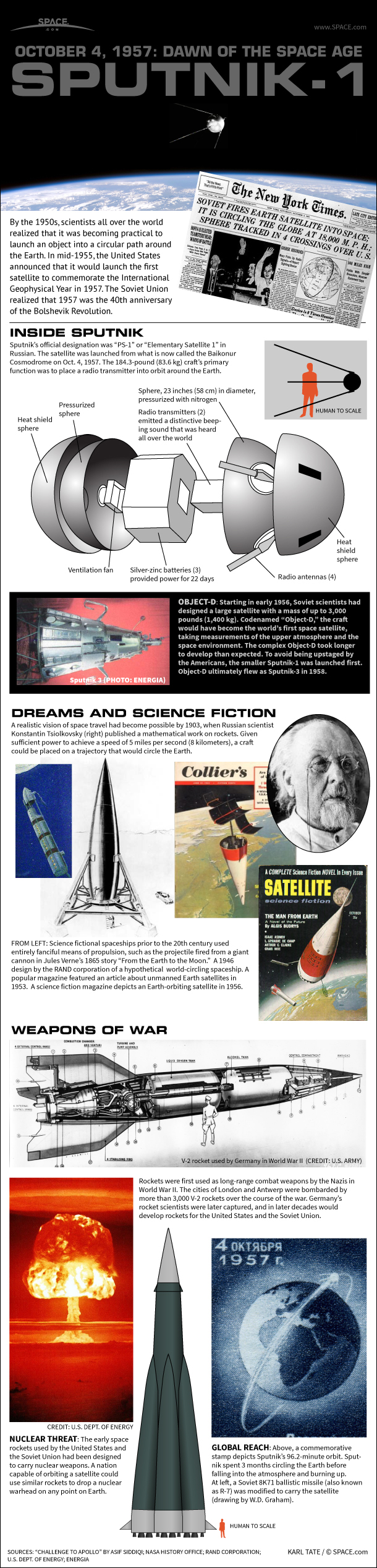
Later in year is World Space Week, which kicks off on the anniversary of Sputnik 1's launch on October 4th. On the website you can find guidelines about how to organise an event, as well as events planned around the world that you can attend.

I'm going to start a new one: Valentina's Day. On 16 June 1963, she became the first woman to orbit the Earth and she is still the only woman to have carried out a solo space mission. We should celebrate this! 


7. Go satellite spotting 

Although light pollution has made it harder for people in densely populated areas to see the night sky, most people would recognise a star. Fewer, perhaps, realise that they're also watching satellites.

Satellites don't have their own lights, but we can see them when they reflect the light of the Sun, often bouncing off the solar panels which power the spacecraft. Even at night the satellites are high enough to catch the Sun's rays. You'll generally only see Low Earth Orbit satellites, but there are plenty of them, as well as the International Space Station.

Stars move very slowly, but satellites are fast - after all, they orbit Earth every 90 minutes or thereabouts. Look for a fast moving light. Beware of flashing lights: this is probably an aeroplane, not a satellite.

To see the largest and brightest object in orbit, the ISS, this handy NASA site allows you to search for local sighting opportunities.

Everyone knows the old folk rhyme about wishing on the first star you see in the evening (usually Venus, by the way - a planet).
Star light, star bright,
First star I see tonight,
I wish I may, I wish I might
Have the wish I wish tonight

The sky has changed since that rhyme was made, and our relationship to it has changed also. This is Billy Bragg, in his 1983 song Looking for a New England:
I saw two shooting stars last night
I wished on them but they were only satellites
Is it wrong to wish on space hardware
I wish, I wish, I wish you'd care

Is it wrong to wish on space hardware? I say no. Instead, ask Dr Space Junk to grant your wish on a satellite. Here is my rhyme to go with your satellite spotting expedition, and it's even better because you get to make THREE wishes.

Dr Space Junk in your ship,
Watching every tiny blip.
Please bestow my wishes three:
One for Earth, one for Sea,
and one for the satellite high above me.

8. Join a space society

What could be better than making new space friends and getting to hang out at space events with them? There are a number of societies at national, state and local level which will enable you to get involved in space. Here are a few that I recommend.

Space Industry Association of Australia. This is an industry representative organisation, but definitely worth joining if you work in aerospace or a space-adjacent area.  Full disclosure: I am a member.
Space Association of Australia. Based in Melbourne, the SAA has regular meetings open to the public with guest speakers, and also has a radio broadcast.
National Space Society. This is a chapter of the US society. Every year the NSS hosts the Australian Space Research Conference.
The American Institute of Aeronautics and Astronautics. There are chapters of the AIAA in Sydney, Canberra, and Adelaide.
The British Interplanetary Society is one of the oldest space societies in existence. (Maybe even the oldest one).  They publish a journal and a magazine.
The Planetary Society is another US one. It was founded by Carl Sagan, among others, in 1980.
Mars Society Australia is part of a global network of Mars societies. Basically they want to go to Mars, but they have lots of activities on Earth too.
Australian Space Research Institute (ASRI) is a volunteer organisation interested in space activities.

If you want to get your hands dirty, you will find local rocket societies almost everywhere across Australia. This is where you can help build and launch a small rocket. It might not get to space but it's the same technology!


9. Eat astronaut food and drink astronaut drinks

There's lots of books around showing you how to train like an astronaut, but who can be bothered with that? Let's go straight to the gourmet end of astronaut existence. Your first tool is the wonderful Astronaut's Cookbook, which combines recipes with stories of life in space.

It's a myth that the powdered drink mix Tang was created for the space program, but it was invented in 1957, Year 1 of the Space Age. It became permanently associated with astronauts and spaceflight when it was used in NASA's Mercury and Gemini programs in the 1950s and 1960s. These days it comes in many difference flavours. And you can make cocktails with it! Here is the recipe for the Buzz Aldrin:

Tang (for garnish)
1 orange slice
4 oz of vodka (this is an American recipe)
2 tablespoons Tang
Ice 
Place Tang on a plate. Run orange slice around the rim of a glass; rotate rim of glass in Tang. 
In a cocktail shaker, add Tang, vodka, and ice; shake. Strain into glass. Makes 1 cocktail.
The fanciness doesn't stop there. How about following this yummy cocktail with some luxurious Lobster Newburg, as eaten by the lucky crew of the US space station Skylab?

For dessert - of course you need astronaut freeze-dried ice cream., and it's fairly easy to obtain. Many museum shops stock it, and you can buy the original online here. A cheaper version is available from the Questacon shop. For an easy substitute, try meringues!

Breakfast is a snap. Here is a recipe (scroll down) from the Astronaut's Cookbook for a microgravity-friendly cereal.

Any food in a pouch is a good bet. You can buy lots of yogurt, fruit and baby food in this form.


10. Be aware of space for a day

You can decide to do this any time. Just for a day, think about how you are connected to space through Earth and through human technology.

It starts when the sun rises. As you lie in bed, think about Earth slowly turning underneath you, tilting you towards the Sun.

Think yourself into space. Imagine your body moving through time and space, not confined by your line of sight. Sight is not a sense that helps us here. In your mind's eye, think of how gravity is anchoring you to the surface. Be aware of the layers of atmosphere above you, until they thin out and give way to the stars and planets.

Where's the Moon? Look for it in the sky - if it's daytime, you might see its pale white curves, hard to distinguish sometimes. It seems passive, slowly moving in an arc overhead, but its gravitational force causes the tides. Up on the Moon are the remnants of human missions, forming an other-wordly archaeological record.

Perhaps you look at the weather on your phone or the television/radio news while you're having breakfast. The maps of cloud formations over Earth are brought to you from Earth observation satellites.

Every time you use your smartphone, look up and think of the satellites it's using to hook into GPS. Perhaps you get some cash out from an ATM. Look at the printed receipt: the time on it comes from satellites signals. At the supermarket, all of the goods you're about to buy are transported by trucks and ships using satellite signals.

As dusk falls, think of how you are now turning away from the Sun, turning to face the outer regions of the solar system, where human spacecraft are wending their way out into the galaxy beyond.

And of course, finish your day with some satellite spotting.


Space. You're standing in it.


Wednesday, January 23, 2019

Sputnik 1 lives on in models of the world's first satellite

In 2017, I was lucky enough to be part of a UN workshop on the theme of women in space. Most of it was run at the offices of UN Women, but one session was in UN HQ in New York City.

I was delighted to see a model of Sputnik 1 suspended from the ceiling in the lobby. The model was presented to the UN by the USSR in 1959. 

The satellite itself of course no longer exists, having re-entered after three months in orbit in January 1958. I wonder what you would find if you made a catalogue of all the Sputnik models that existed in the world - a footprint of its cultural influence? The catalogue would include the model that usually resides on my office desk, for example. You'd never be able to track them all - there must be so many small ones produced as models or toys dispersed throughout the world. Some would be in museums; some in public institutions like the UN; others in universities. The rest would be in schools, people's houses and who knows where else.

Models don't have to be accurate, either. Perhaps there are some that are larger than the original satellite, which was 58 cm in diameter. Many would be smaller. They may use different materials, or get the angle and size of the antennas wrong. But they'll all have a shiny sphere with four long legs, the essential features of this space object which have come to symbolise the early Space Age.


Sunday, June 03, 2018

Seven reasons to love French aerospace

One of the happiest months of my life was when I rented an apartment in the 20th arrondissement of Paris, so that I could do some work in the archives of the Musee de l'Air et de l'Espace at Le Bourget. Every morning I'd go down to the boulangerie on the ground floor of my apartment building for fresh pain and delight in the simple pleasure of perfect bread and butter. I may not have spent quite as much time in the archives as I intended, but what the hell.

Here are a few reasons to love French aerospace.

1. Asterix 1

Asterix 1. Image source: unknown.
When France launched Asterix 1 on a Diamant rocket from Algeria in 1965, it became the third nation in space. Asterix 1 is named for the plucky Gallic bande dessinee character who successfully holds the Roman invaders at bay against all the odds. His namesake, the sub-conical striped-and-antennaed satellite, is quite simply super-cute, and one of my all-time favourites.


Image source: author.

2. Alexandre Ananoff

While working in the archives, I became aware of an influential French space visionary. The name Alexandre Ananoff (1910 - 1992) came up over and over again. He wrote about the mechanics of spaceflight, the kinds of spaceships we might see in the future, and social aspects of space exploration. This article, by Pierre-Francois Mouriaux and Philippe Varnoteaux, appraises his contribution to French space exploration. They say:
A. Ananoff was a real ambassador for astronautics and a pioneer in space education for the general public—probably the first one in France.
In addition, he advised Herge about aspects of spaceflight for the two Tintin volumes where the boy adventurer goes to the Moon.


3. Tintin walks on the Moon


Image source: Tintin.com
To be honest, I wasn't interested in Tintin as a child, and don't have any memory of the books being around. But when I became aware, as an adult, that Tintin had travelled to the Moon, that was a different story! Objectif Lune and On a marche sur la Lune (Objective Moon and We have walked on the Moon) tell the story of Tintin and Co's encounter with rocket scientists and spies at the central European launch site in the mythical country of Syldavie and their journey to the Moon on a very V2-like rocket. As far as I can tell, it's one of the earliest depictions of footprints on the Moon.


4. Kourou

Image source: Guyane Evasion
Kourou, in French Guiana, is where the launch site of the European Space Agency is located. It has an excellent museum and a huge amount of spaceflight history. I spent a week there in 2005, also working in the archives. I touched a rocket in the assembly building, and perhaps a tiny portion of my DNA survived launch and is now in space! (Stop having a conniption, this was not a clean room situation). I also visited the famous Iles de Salut, where best-selling author and escapologist Papillon was incarcerated. I didn't see an actual launch, although I did sit in the control room viewing area and imagine the hum and chatter when it was full of people. Every day I sipped Ti-punch and thought, read and talked space.  It was fabulous.


5. Cool space words

One day, as my plane descended into Adelaide airport, I noticed a plane without wings lying in the grass near the runway. Oh, I thought, it looks like a rocket. Then I realised. Fusee - the French word for rocket -  is the same root as fuselage, commonly used to describe the body of a plane. D'oh.

The cool wordage doesn't stop there, though. My friend Alexandre Ananoff has a word for spaceship: Astronef. This, I think, it the same root as navy, and the French word for space shuttle is navette.

Scaphandre is space suit, also used for diving suit. To me, it has a Homeric ring. Or it could be a character in Aeon Flux

French has a word for landing and taking off FOR EACH PLANET AND MOON. This is beyond cool, a new galactic level of cool. You've possibly heard the terrestrial version of these words if you've flown a French airline - aterrissage. Terre is Earth, and aterrissage is landing on the Earth. Alunissage is landing on the Moon, and amarsissage is landing on Mars. In a future multi-planet solar system economy, the precision of these terms could be very useful. 


6. Musee de l'Air et de l'Espace, Paris


Just check out these babies. Image source: Capcom Espace
This museum, located at Le Bourget in Paris, is amazing. I don't pay much attention to the aeroplane side of it, to be honest, but as well as all the aerospace you could want, there are BALLOONS. Yes, balloons. This is not a Monty Python drill: you can learn all about the golden age of French ballooning right here. Asterix 1 is there too. And there's all the French animals in space: spiders, kittens, rats. One of the things I love about this museum is that we're so used to seeing US-dominated space material culture. It really is striking when you see another national style of technology, and a useful reminder to remain critical of US space hegemony.


7. Le Petit Prince


By Antoine de Saint-Exupery


Continuing the entanglement of air and space, this classic work of children's literature was published in 1943 and is still a favourite with kids across the world. It's really a moral tale, but it has the enchanting conceit of tiny planets or asteroids which grow roses. It was illustrated by the author, Antoine de Saint-Exupery. 

The little prince says:
I love listening to stars at night. It sounds like a hundred million bells.


Sunday, March 18, 2018

The cultural significance of the Vanguard 1 satellite - oldest human object in orbit

The Vanguard I satellite, launched successfully on March 17, 1958, is now the oldest manufactured object in orbit. It is no longer transmitting, but is in a highly stable LEO orbit with every prospect of remaining there for perhaps another 600 years. It is a physical testimony to the momentous period when humans first ventured beyond the atmosphere. Despite its failure to be first in the ‘Space Race’, Project Vanguard is acknowledged as ‘the progenitor of all American space exploration today’ [1]. For example, the Minitrack network, set up for Vanguard, became the backbone of the NASA Satellite Tracking and Data Acquisition Network used to track all the early generation of satellites [1].

Vanguard 1. (Image: NASA)

Unlike Sputnik 1 and Explorer 1, Vanguard was designed as a scientific satellite with no military 'taint'. It was launched using sounding rockets rather than missile technology, and originally was to have flown four experiments, including James Van Allen’s. In the spirit of international cooperation created by the International Geophysical Year, the Vanguard team recruited a network of volunteers across the world to carry out visual tracking in Project Moonwatch [2]. As it turned out the Moonwatch volunteers first applied their training and equipment to pick up Sputnik’s 1 orbit.

Ultimately though, Vanguard represents the conflicting motivations and rationales for space exploration in the critical period of the 1950s, when the United Nations also first moved to set up the principles of the Outer Space Treaty. Although it was designed as a peaceful scientific satellite, it was also an ideological weapon, a 'visible display of technological prowess' aimed at maintaining the confidence of the free world and containing Communist expansion [1, 3]. Vanguard’s design and mission reflect the competing models of cooperation and confrontation in space, at a time when there were no rules, laws or guidelines to structure the human-orbital interaction [4]. It is now the only one of the early satellites to remain in LEO. Apart from significance at the aesthetic, historic and social levels, Vanguard 1 is also the only object that can tell us what happens to materials when exposed to the LEO environment for 60 years. 


This post is an excerpt from Gorman, A.C. 2005 The archaeology of orbital space. In Australian Space Science Conference 2005, pp 338-357. RMIT University, Melbourne

References

[1] Green, Constance McLaughlin and Lomask, Milton, Vanguard. A History. NASA SP-4204. The NASA Historical Series, Washington DC, 1970

[2] Chapman, Sydney IGY: Year of Discovery. The story of the International Geophysical Year. University of Michigan Press, Ann Arbor, 1959


[3] Osgood, Kenneth A. 'Before Sputnik: National security and the formation of US outer space policy', in Roger D. Launius, John M. Logsdon and Robert W. Smith (eds) Reconsidering Sputnik. Forty years since the Soviet satellite. Harwood Academic Publishers, 2000, pp 197-229


[4] Gorman, A.C. and O’Leary, Beth Laura, 'An ideological vacuum: the Cold War in space', in John Schofield and Wayne Cocroft (eds) A fearsome heritage: diverse legacies of the Cold War, pp 73-92. Walnut Creek, CA: Left Coast Press


Sunday, February 11, 2018

The space world to come, imagined in 1956

This book has such a wonderful dust jacket. I can't remember where I found it any more but I suspect it was on one of my expeditions searching second-hand bookshops and op shops in Adelaide for ex-Woomera literature. Often, the libraries of those employed at the Long Range Weapons Research Establishment find their way onto the shelves. I like reading the old books to get an idea of how people thought the Space Age was going to unfold, and what they thought the space environment was like.


Apart from its appealing design, the interior holds many delights. Of course, it was written before a satellite had been successfully launched into Earth orbit - which happened a year later in 1957 -  and at this stage, the USA expected that its Vanguard satellite would be the first human object in space.  Here is the authors' assessment of what it all meant:
The Earth satellites developed under Project Vanguard are to be the first space vehicles.  The prime purpose of these vehicles will be to derive basic data about the environment in which we live.  Yet this is only the short view. 
The longer view may easily rank in significance with the first steam vessel in 1802, the first railroad in 1825, and the first airplane in 1903.  Each of these radical inventions basically altered ways of life.  It is probable that space flight will do no less.  The orbiting vehicles can affect nearly every human activity, ranging from the discovery of new medicines to the development of new literature and philosophies. They can help bring about a universal peace or a universal chaos.
This book is concerned with the utility of space satellites and the way this aspect can affect every person on Earth. .... We can see them giving us long-range weather forecasts, improving our communications and transportation systems, helping us discover underground treasures, influencing military tactics, and questioning many theories (Bergaust and Beller 1956:13).

Not a bad forecast of the impact of satellites! However, where are the new literatures and philosophies? Science fiction already existed, although it has changed and evolved over the decades. Perhaps I might opine that it's only now that we are seeing the coherent emergence of new ways of thinking influenced by space. 


References
Bergaust, Erik, and William Beller  1956  Satellite! The first step into the last frontier - the full facts about man's coming exploration of space.  New York:  Hanover House


Thursday, December 28, 2017

Space haiku: afternoon constellation

Afternoon constellation
Data from space
Drowns in my teacup


Illustration by Dr Space Junk


_____________________________________________________________________________

I was challenged to write a haiku about space on Twitter, by @spacejake_, - and no inspiration came. Some days later I was sitting in the 4th South Australian Space Forum, and a speaker mentioned the afternoon constellation of satellites. A couple of minutes later he said something about data from space, and the first two lines of this poem fell into my head.

Afternoon constellation made me think of afternoon tea, sitting at a kitchen table with a cup of tea and the afternoon light falling through the windows. I imagined satellite signals falling unperceived with them, the data lost in milky tea. Signals are no good unless you're listening for them, with the right instrument.

It's probably not a technical haiku, just short lines evoking that form, but close enough is good enough as far as I'm concerned.

I drew a picture to go with it because that's what I think my space poetry hero, @tychogirl, would have done.


Thursday, May 11, 2017

How geodesy created a vision of the Earth through the jewelled LAGEOS satellites

Image courtesy of NASA
Could this be the most beautiful satellite ever made? In fact it is one of twins, as there are two of these jewelled spheres in Earth orbit. They're the LAGEOS satellites, essentially inert reflectors to bounce lasers off. The jewels are fused silica, except for four made from germanium. The interior is not a void filled with instruments: it's a solid brass cylindrical core, covered in a thick aluminium shell, as you can see in the video below.

(Hang on, you say. Fused silica? Isn't that just glass? Well yes and no. It's amorphous silica, but without any of the other ingredients that make up the glass we use, like lime, soda and potash).

LAGEOS stands for  LAser GEOdynamic Satellite. The first was launched by the US on May 4 1976, and the second, made by the Italian Space Agency, was launched in 1992.  This means in 2017 the 60 cm sphere - harking back to the spherical satellites of the early space age, such as Sputnik, Vanguard and Echo, achieved 41 years in orbit. It's a veteran of space science.

And because they're completely passive, with no power, fuel, solar panels or instruments, their missions are not ending any time soon. They should be up there for about 8.4 million years according to the original prediction! They can just keep going until their reflectors are too weathered by exposure to the space environment to bounce a laser back to Earth. The glass eyes are meant to be dust and radiation-resistant, but, just like the famous space shuttle windows, they could be damaged by hypervelocity particle impact. Perhaps the quality of the return signal could even be a way of measuring deterioration in the surfaces since launch, and hence gauging something about taphonomy in space. I wonder if this is possible?


The two satellites orbit at around 6000 km in a circular polar orbit. The information they have provided has contributed to new perspectives of the Earth, as former LAGEOS project scientist David E. Smith explains
Today, we see Earth as one system, with the planet’s shape, rotation, atmosphere, gravitational field and the motions of the continents all connected. We take it for granted now, but LAGEOS helped us arrive at that view.
Even more importantly, the two LAGEOS define the centre point, based on the Earth's centre of mass, for the terrestrial reference system used in navigation.

One of the things they're used for is to measure the speed and direction of tectonic plate movement. Because of this, LAGEOS-1 was the recipient of one of Carl Sagan's time-travel interspecies communications.  He conceived a design - drawn by Jon Lomberg who also worked with him on the Voyager Golden Records - engraved on a thin steel plate that was wrapped around the brass cylinder core - depicting continental drift at three points in time: 268 million years ago, 1976, and in 8.4 million years. You'd have to crack the satellite open like an egg, though, to get at the message. It's precisely the sort of alien mystery object that science fiction writers imagine falling to a planet and catalysing personal and social revelations, even when the object is impenetrable. Who knows who or what might find it in 8.4 million years? Will it melt in re-entry, fall into the ocean unnoticed and unmourned, or slam into the Australian outback like Skylab, to lie under the stars for another few million years?

There's another little mystery too. LAGEOS 1 has the most precisely know orbit of any orbital object. In 1978, LAGEOS-1 began descending at a much greater rate than it should have. In 1983, as David E. Smith described in a Nature paper, the satellite rather unexpectedly began to ascend again. It's still losing altitude - 1.33 mm each day - but because it is mostly beyond the reach of the atmosphere which drags objects in lower orbits back in, the cause of the decay is still a matter of debate.

And here's another interesting fact. The Optus B series of GEO telecommunications satellites have laser retroreflectors mounted on them too. My colleague Owen Mace (one of the pioneering Australis Oscar V team) had the contract to make them. Optus B1 is in the GEO graveyard orbit; Optus B2 exploded on launch, and Optus B3 was replaced by Optus D1. This means it is still in GEO but technically classified as space junk. Is anyone ranging to the two reflectors? I don't know....


References
Dey, Uijal, Kar, Samanwita, and Amitabha Ghosh 2016 Possible effect of the Earth's intertial induction on the orbital decay of LAGEOS. Journal of Astrophysics and Astronomy 37(3):1-9

Fitzmaurice, M.W., Minott, P.O., Abshire, J.B. and H. E. Rowe 1977 Prelaunch testing of the Laser Geodynamic Satellite (LAGEOS). NASA report

Smith, David E. 1983 Celestial mechanics: Acceleration on LAGEOS spacecraft.  Nature Vol 304 p 15


Note: after I began writing this blog post, it morphed into an article for The Conversation.


Sunday, October 11, 2015

Satellites are little knots of materiality in an invisible electromagnetic tapestry

Satellites go beyond the limits of human bodies to be our senses in the void. They are conduits of information in the form of signals in different wavelengths, mediated and managed by the hardware of transponders, antennas, modulators, processors, and data storage facilities. Without communication, they have no function, whether this is gathering data from the solar system or deep space to send back to earth, or transmitting terrestrial telephone and television around the planet. These signals are the real purpose of the hardware. Satellites are little knots of materiality in an invisible electromagnetic tapestry.

In the nearly 60 years since launch of Sputnik 1, the rara avis has become a veritable flock. There are over 23 000 tracked objects over 10 cm, and over 100 million particles less than a centimetre in size currently located between Low Earth Orbit and the so-called ‘graveyard orbit’, approximately 36 000 km above the surface of the Earth. A mere 6% of these objects are operational spacecraft. Their chronological range is from 1958 (Vanguard 1, the oldest surviving spacecraft, with its upper launch stage and a loose clamp) until the present time. In weight, the accumulated debris is estimated to be 6000 tons. But I argue that this ‘space junk’ represents far more than just a risk or hazard to operating spacecraft and satellites, as it is regarded by space industry, or an all-too-familiar pollution problem: it is the repository of human ideologies and values – capitalist, communist, mercantile, colonial, gendered, scientific, environmental and cosmological.  As junk, it is the proper study of archaeologists, who excavate through what is discarded in the garbage heaps of history, to find the significance in what people consider to be without value.


(This is a passage I removed from a recently submitted paper, but I quite like it despite that)


Saturday, April 25, 2015

When geostationary orbit became real: the cultural significance of Syncom 3

Syncom 3 was the first true geostationary (GEO) communications satellite, launched in 1963, nearly two decades after Arthur C. Clarke predicted the potential of GEO for telecommunications. Prior to the Syncom series, communication satellites were located in Low Earth Orbit (LEO) where they required massive terrestrial infrastructure. Syncom 3 was aimed at providing live television coverage of the 1964 Olympic Games in Tokyo, as well as carrying telephone transmissions. But its uses were not confined to the civil sphere. Syncom 3 and its geosynchronous sister Syncom 2 were the primary communications link between South East Asia and the western Pacific in the Vietnam War.

Syncom 3
Image courtesy of NASA
Only six years after the first satellite, Syncom already shows how satellite design has moved past the early templates of the baby moon (Sputnik and Vanguard) and the rocket (Explorer 1). The Syncom series were the first spin-stabilised satellites. The basic design is still in use, for example, in the Aussat and Optus B series.

Syncom 3 is the ancestor of the satellites that provide telecommunication services today. Technologically, Syncom 3’s design and mission helped shape the world of the second millennium where nearly everyone is within reach of almost every point on the globe, and transnational entities flicker and spark into existence between hardware on Earth and in orbit.

Syncom 3 was a major step in the process of globalisation that has been developing since the 1400s when navigation connected previously separate old and new worlds. For some, globalisation has meant new possibilities and opportunities; for others, it has meant the erosion of identity in contexts where colonial exploitation has already exacted a high cost.


Note: This is an excerpt from Gorman, A.C. 2005 The Archaeology of Orbital Space.
In Australian Space Science Conference 2005; pages: [338-357]. Melbourne: RMIT University.


References
Clarke, A. C., 1945 Extraterrestrial relays: can rocket stations give worldwide radio coverage? Wireless World, October, 1945, pp 305-308


Monday, April 15, 2013

The Anthropocene and the ethics of space exploration

Final frontiers

For many advocates of space exploration, the Solar System is the answer to human woes. As we exhaust our terrestrial resources, face overpopulation and stare down the barrel of rising sea levels, moving off-planet holds as many promises as it does challenges.

Already we have left our cultural footprint in the Solar System, from the teeming satellites in Earth orbit and landing sites on the Moon, Mars and Venus, to the Voyager spacecraft at the edge of the Solar System. And access to space is slowly moving out of the hands of national governments with the rise of commercial spaceflight development, and the growth of the space tourism market.

Why is space different?

In general, we don’t think of the space environment in the same way as Earth’s. There are several reasons for this. One is the common perception of space as a black, empty vacuum. Second, unlike Earth, space is practically infinite — beyond our sun there are billions of others just like it, even in our 'unfashionable end of the western spiral arm of the Galaxy'.

Then there is the absence of life, as far as we know — although there is always hope that this might change with further exploration. Until that happens, there is nothing living to suffer from any human activities in space. Effectively, there is no need to consider human impacts on the space environment seriously.

Historically, space has been seen as the very last frontier, ripe for colonial conquest. Just as on Earth, the motivations for colonisation are not just about curiosity, or an 'urge to explore', but about finding new resources to exploit for terrestrial markets. The unstated rationale behind this draws heavily on Western anthropocentric ideas of the mastery of creation — the assumption that the non-human world is there for our use. This instrumental view is still very prevalent in the way the space industry justifies its activities.

It’s also a matter of 'out of sight; out of mind'. When we look outwards from the surface of our planet at night the things that arrest our attention tend to be the stars of deep space. Unless you know what you’re looking for you might not even identify the other planets in our solar system, let alone the human-made satellites and space stations.

Of course it doesn’t help that so few people have actually experienced space itself. And for many of them, the revelation of space was actually one of Earth. The vision of the 'whole Earth' was first seen by the lunar-orbiting Apollo 8 mission in 1968. The image of the blue-and-white planet, a marble-sized splash of colour in the inky blackness, emphasised the fragility of life on Earth, and was responsible for the growth of a global ecological awareness.

In all of this, the intrinsic values of the space environment, in and of itself, have been frequently overlooked. While the need for an environmental ethics of space has long been recognised, there is little evidence that space industry has moved beyond a purely anthropocentric perspective.

The rights of rocks

On Earth, the concept of 'nature' having value in its own right, independent of human use, is no longer problematic. Australian philosopher Val Plumwood has been at the forefront of a movement to break down moral distinctions between humans and nature. Plumwood argues that nature has its own agency or autonomy, and should be reconceived as a co-participant in human endeavour rather than something on which we are dependent.


Whatever we do to nature is a reflection of ourselves – whether here or on other planets. watsonsinelgin/Flickr


In her view, we pay attention to the resources offered by the environment, and the limits they impose on our activities, 'only after disaster has occurred' and then only to “fix things up”. Dependency appears as a source of anxiety or threat, or as a further technological problem to be overcome'.

Never has this statement been more applicable than to the problem of orbital debris or space junk.

Our use of Earth orbit to place the satellites on which we now depend for telecommunications, weather, and navigation has created a seemingly irreversible environmental crisis — space so filled with junk that we are at risk of losing our access to it. Even so, the problem is still framed from an anthropocentric and geocentric perspective: in other words, how it will affect the Earth? The value of this apparently empty space is conceived entirely in terms of human use. Could we argue that it has intrinsic value — and as such is a place towards which we have a moral obligation?

The issue is perhaps clearer when we consider other planets. The view that inanimate celestial bodies have a right to exist undisturbed has been called 'cosmic preservationism'. One of the arguments is that the uniqueness of these planetary landscapes creates intrinsic value. There is no doubt — as human space exploration has repeatedly proven — that each object in space has its own story to tell.

And indeed, we really know so little of the solar system that it is hard to tell what is unique and what is common. However, critics of cosmic preservationism claim it leads to the absurd position of rocks on Mars having rights.

Citizens of the solar system

In order to continue as a space-faring species, and even perhaps to continue to live on Earth, we have to find sustainable ways to use the resources of space to survive. This means water, oxygen and minerals, all of which exist in various quantities spread across planets and asteroids. Already, the technologies and structures we may need to mine the moon and asteroids are being considered.

Our very presence on other celestial bodies, whether in human form or through robot avatars, changes them. They are altered physically, and also conceptually, becoming part of a human cultural landscape in a new way. We cannot land, sample, build colonies or mines and whisk away as if nothing happened — our chemical and mechanical traces are now part of the planet. At this stage of human space exploration such impacts are minimal, and no doubt acceptable. But this won’t always be the case.

Already, the international geological community is heralding the arrival of a new epoch – the Anthropocene. Human impacts on the Earth have reached the scale where they are defining a distinct geological layer. Will we have the same level of impact on the rest of the solar system too?

Perhaps the answer is to take up Plumwood’s challenge and abandon the opposition of nature and culture. This allows an acknowledgement of intrinsic value in the space environment that need not take priority over human interests, but can be managed by a critical assessment of competing interests. An ethic of respect for the wonders of the Solar System of which we are an integral part should not be that hard to achieve.

You can read the rest of the series here.

The Conversation
This article was originally published at The Conversation as part of the Final Frontiers series. Read the original article.


Friday, April 06, 2012

Thursday, January 26, 2012

How telecommunications technology affects our conceptions of space

I often think about how our conceptions of space have changed as we look deeper into the far reaches of the universe, and as satellite navigation technologies influence the way we move on the surface of the Earth.

Oliver Sacks once wrote an article about how a man blind since early childhood fared when he recovered his sight. Vision created such a profoundly different way to apprehend the world than touch and hearing alone. As Sacks explained it, when we look at a cat, we see all its constituent parts at once: the head, ears, tail, legs, torso, fur, whiskers. We see that the right kinds of bits are there in the right kind of relationship to each other and in the right proportion. It is a simultaneous way of knowing. If you had to identify what kind of animal it was by touch alone, though, how would you do it? His patient would touch each part separately, and would only know if it was a cat if, after feeling enough of them, this was the most logical conclusion. So this is a chronological way of knowing.I found this a very compelling description.

I think something similar has happened to people who now rely on navigation devices in their car, like taxi drivers. Whereas once you might have had some kind of map projection in your head, where in your mind's eye you could visualise your destination and then think of a way to get there, now it seems that you listen to the instruction and then follow it, bit by bit, just like the Sacks' patient. "In 500 metres, turn right". It's more like touching than seeing. So it produces a different conception of space: in fact a more closed-in one, where you are only aware of your immediate environment.

Perhaps this works for the much-speculated-about ability of Aboriginal people to paint or represent country from an aerial view, when they haven't seen it from the air.  It's hard for us to comprehend this because even before GPS, our way of interpreting spatial relations was based on maps with Cartesian coordinates.

So you can imagine I was very interested to see this Scandinavian project looking at the way the telegraph changed people's conceptions of space in the late 1800s. This is how they describe it:

Distant news and local opinion: How the Telegraph Affected Spatial and Temporal Horizons in Northern Scandinavia, 1850-1880

Image courtesy of CMYBacon
The electric telegraph lines constructed across Europe starting in the late 1840's profoundly changed conditions for long-distance communication in the region. This project analyses the effects of the electric telegraph on northern Scandinavia.

Focus is on the relationship between time and space in 7 newspapers from Norway, Sweden and Finland. By investigating 1) the motives behind extending telegraph lines to these regions, 2) the ideals associated with the technology itself, 3) the representation of time and space in the news and 4) the spatial and temporal references of the concept “public opinion”, the study gives a new perspective on the development of communications in this area. Using the spread of technology as a lens through which we may observe societal change, this work will produce a transnational history relating the idiosyncrasies of northern Scandinavia to the common developments affecting Europe during the second half of the 19th century.


I think this is really interesting stuff. I don't know if I would have chosen newspapers as the primary source to address the spatial/temporal - but the point about newspapers is that they will, presumably reflect public sensibilities, and the news reported will change radically as events further away become reported more quickly. So what people read will shape the boundaries of their conceptual world. Herodotos for the 19th C, and perhaps with as many marvels.

Monday, January 16, 2012

Surviving space junk re-entry: a beginner's guide

Given how frequently space junk re-enters the atmosphere, it's surprising that there is not more information about what to do in this event. So I am putting together here a small guide just in case you happen to be in this situation.

1. Don't panic: it is highly unlikely to actually fall on YOU.
You'll have heard all the commentators saying this, but it really is true: the odds of it being YOU that is the site of impact really are extraordinarily low. In the entire history of human space exploration, there is only one recorded instance of someone being hit by space junk. According to the Centre for Orbital and Reentry Debris Studies (CORDS) this was Lottie Williams of Oklahoma, who was hit by a piece of a Delta II rocket as she was taking a walk one day in 1996. She was unharmed. When Skylab re-entered over Western Australia in 1979, there were no claims for property damage made and no-one was hurt. There's just so much ocean, desert and ice - and this is usually where stuff lands.  There has never been a recorded re-entry over a city or town.  

The problem is, of course, that it is very difficult to predict re-entry points as there are so many variables to take into account. So it's not easy to be prepared.

But let's just say you are likely to be in the debris footprint area. Here's what you can do.

2.  Secure your pets or animals
It's just like fireworks: animals don't like it very much. The fragments may be traveling at tens of thousands of kilometres per hour as they come screaming into the upper atmosphere (which then slows them down until they fall vertically). The pieces are compressing the air into pressure waves and the energy builds up until it creates an exploding sound or sonic boom. The sonic booms can be frightening for humans too. Take the same precautions for household pets that you might on New Year's Eve. Keep them inside if possible, and remain calm around them. Don't use a chain or slip collar to restrain them. Some recommend playing them classical music (or something else soothing) as a distraction. There are many websites where you can find out more about this.

3.  Do not touch fragments of re-entered spacecraft.
In its journey through the atmosphere, the spacecraft ,or the pieces of it, are subject to extreme heating caused the friction of the atmosphere, through which it may be travelling at hypervelocity. Depending on the materials, some may still be burning when they land. Even when cool, there may be jagged and sharp edges that easily cut you.

Moreover, there are many toxic or radioactive elements that may be part of the fuel, the structures, or the experiments flown on board the spacecraft. If you handle them without knowing what you are doing, they may poison you. These include the fuel hydrazine and the metal beryllium. Let the authorities deal with it.

You're probably pretty safe with a titanium or steel pressure spheres, the most common spacecraft part to survive re-entry. However, despite titanium's traditional reputation as an inert metal, there is some recent evidence that the corrosion products of titanium may be harmful.  Don't take unnecessary risks.

4.  Be ready for fire
If burning fragments are falling all around you, it's not impossible that one may land on your house or the building you're in and set it alight. And when you go outside, there may be more. Do what you would normally expect to do in such an emergency: call 000 (or the fire department in your country); make sure you know where everyone is; evacuate the building (it will be safer outside) and do not go back inside. If you have a fire plan, put it into effect. This may if course involve removing animals or releasing them.

5. Notify the relevant authorities
There's a few people who need to know. Your local, regional or state government may have to play a role in coordinating relief, or recovery of debris, so let them know. It's also a matter of international relations. The country it lands in will have to notify and communicate with the launching state about recovering fragments (these are used to analyse what happened) and perhaps to talk about compensation. If your country has a space agency, they also need to know.

Debris is often found months or years later; and when it's not a high profile re-entry like Skylab, UARS or Phobos Grunt, it may not be obvious which re-entry it came from or who owned it. It's up to the government to find out. (Dr Space Junk has provided this service on occasion).

6. Assist in the scientific analysis
Your experience can be very useful. The colour of fragments falling through the sky tells us something about their temperature and sometimes what they are made of; the number and timing of falls helps map the debris footprint; the size and nature of the fragments may indicate what part of the spacecraft they came from and how it broke apart. While you most certainly shouldn't touch recently fallen material, or move it, you can take photographs and GPS coordinates, and estimate the dimensions of the pieces. What you see and experience can have some value when put together with information gathered from other sources.

7.  Be aware of the legal situation
There are two international conventions that you should be aware of.  One is the Outer Space Treaty of 1967, which imposes liability for damage caused by space junk on the launching state, and the other is the Space Liability Treaty 1972, which requires that the launching state pay compensation for any damage caused.  I don't know, however, if that includes emotional damage - there is some latitude for interpretation. Keeping in mind safety considerations, if you or your property have been harmed by falling space debris, document it as you would for insurance purposes.

The other critical part of the Outer Space Treaty is that the re-entered material is still the property of the launching state, so you cannot sell it on eBay. In the ideal situation, the launching state will try to recover material for analysis. Be co-operative and don't try to pass fakes off as real space junk - they'll know the difference!

OK. This is very rough and ready, but it's a start. One of the sources for these recommendations is the experience of Western Australians when Skylab re-entered in 1979. It was inspired by my series of #Reentrytips on Twitter.